
Par Kevin Pigeon
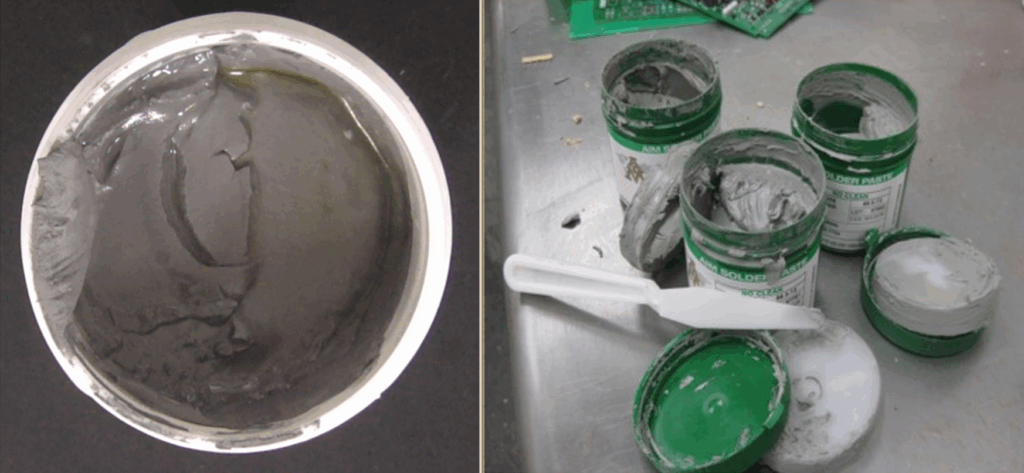
L'équipe d'assistance technique d'AIM voit souvent les mêmes problèmes évitables se répéter. Rien que cette semaine, j'ai remonté trois fois à la cause première d'un problème de pâte à souder, à savoir l'utilisation d'une pâte sortant directement du réfrigérateur sans la réchauffer. Dans chaque cas, une fois que l'utilisateur a suivi les procédures de manipulation appropriées, le problème s'est résolu de lui-même.
Mais ces problèmes sont de plus en plus fréquents, car de plus en plus d'entreprises perdent du personnel expérimenté et intègrent de nouveaux ingénieurs.
L'importance de la manipulation de la pâte à souder
La pâte à braser est un mélange soigneusement formulé de poudre métallique et de flux. Ses propriétés, telles que la viscosité, l'adhérence et l'imprimabilité, peuvent être affectées de manière significative par la température, l'humidité et l'agitation.
Lorsque la pâte est utilisée directement après avoir été stockée au froid, de la condensation peut se former, ce qui modifie sa consistance et son comportement à l'impression. En outre, le fait de remuer la pâte de manière trop agressive ou d'utiliser un équipement de mélange mécanique peut endommager ses propriétés rhéologiques. Même une exposition à une chaleur ou à une humidité excessives pendant l'utilisation peut décomposer le flux ou modifier l'équilibre alliage-flux.
Bonnes pratiques pour une manipulation correcte
La pâte à braser doit être conservée dans un environnement frais et stable. Une réfrigération entre 0°C et 12°C (32°F-55°F) est idéale et permet de prolonger la durée de conservation. Mais au moment de l'utiliser, il faut laisser la pâte se réchauffer naturellement jusqu'à la température ambiante. Cela prend généralement de 4 à 6 heures et doit se faire sans appliquer de chaleur.
Ce n'est qu'une fois que la pâte s'est équilibrée qu'il faut l'ouvrir et la remuer, doucement et à la main. L'agitation garantit l'uniformité de la pâte après son stockage, mais les mélangeurs automatiques doivent être évités car ils peuvent modifier le comportement de la pâte de manière imprévisible.
Pendant l'application, il est tout aussi essentiel de maintenir des conditions environnementales constantes. Les conditions idéales sont une température de 22°C à 26°C (72°F à 80°F) et une humidité relative d'environ 45%, à plus ou moins 5%. Dans des climats plus chauds ou plus humides, la pâte peut sécher ou s'affaisser plus rapidement, ce qui augmente le risque de défauts d'impression. Si les conditions environnementales de fabrication se situent en dehors de cette fenêtre idéale, il est conseillé d'utiliser un cordon de pâte à souder de plus petit diamètre sur le pochoir et de le réapprovisionner plus fréquemment. Ce faisant, vous exposez moins de matériau aux facteurs environnementaux et vous le rafraîchissez avec de la pâte à braser neuve et sans compromis.
Conseils aux nouveaux ingénieurs
Avec la perte de personnel expérimenté, il n'est pas rare de voir ces erreurs se répéter, souvent sans que les nouveaux ingénieurs ou opérateurs concernés en soient responsables. La manipulation correcte des pâtes peut sembler un petit détail, mais elle a un impact considérable sur les performances. Si vous êtes nouveau dans ce domaine, je vous conseille de poser des questions dès le début et de consulter la documentation. Le respect de quelques procédures simples peut éviter des heures de dépannage et garantir des résultats de haute qualité dès le départ.
Conclusion
Qu'il s'agisse de la chaleur estivale, d'un environnement à forte humidité ou simplement du rythme rapide de la production, la pâte à braser doit être manipulée avec soin. Un stockage, une préparation et un contrôle environnemental appropriés sont essentiels pour préserver l'intégrité de la pâte et garantir la fiabilité des joints de soudure. L'équipe technique d'AIM continue de soutenir ses clients dans le monde entier et s'engage à aider les nouveaux utilisateurs et les utilisateurs expérimentés à tirer le meilleur parti de ses matériaux, une impression réussie à la fois.