
By Kevin Pigeon
AIM’s technical support team often sees the same preventable issues repeat themselves. Three times this week alone, I traced the root cause of a solder paste problem back to using paste straight out of the refrigerator without warming it up. In each case, once the user followed proper handling procedures, the problem resolved itself.
But with more companies losing experienced staff and onboarding new engineers, these issues are happening with increasing frequency.
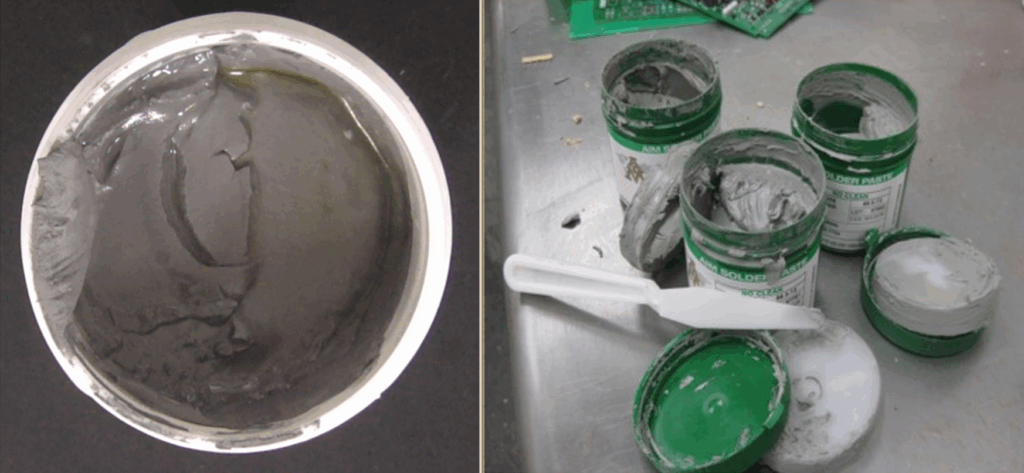
Why Solder Paste Handling Matters
Solder paste is a carefully formulated mixture of metal powder and flux. Its properties—such as viscosity, tack, and printability—can be affected significantly by temperature, humidity, and agitation.
When paste is used straight from cold storage, condensation can form, altering its consistency and print behavior. In addition, stirring paste too aggressively, or using mechanical mixing equipment can damage its rheological properties. Even exposure to excessive heat or humidity during use can break down the flux or shift the alloy-flux balance.
Best Practices for Proper Handling
Solder paste should be stored in a cool, stable environment. Refrigeration between 0°C and 12°C (32°F–55°F) is ideal and helps extend shelf life. But when it’s time to use it, the paste should be allowed to naturally warm to room temperature. This typically requires 4-6 hours and should be done without applying heat.
Only after the paste has equilibrated should it be opened and stirred—gently and by hand. Stirring ensures uniformity after storage, but automated mixers should be avoided as they can alter the paste’s behavior in unpredictable ways.
During application, maintaining consistent environmental conditions is equally critical. Ideal conditions include a temperature range of 22°C to 26°C (72°F to 80°F) and relative humidity of around 45%, give or take 5%. In warmer or more humid climates, paste may dry out or slump more quickly, increasing the risk of printing defects. If manufacturing environmental conditions are outside this ideal window it is advisable to use a smaller diameter bead of solder paste on the stencil and replenish it more frequently. By doing so you are exposing less material to the environmental factors and refreshing with new uncompromised solder paste.
Advice for New Engineers
With the loss of experienced personnel, it’s not uncommon to see these errors repeated—often by no fault of the new engineers or operators involved. Proper paste handling can feel like a small detail, but it has an outsized impact on performance. If you’re new to this space, my advice is to ask questions early and check the documentation. Following a few simple procedures can prevent hours of troubleshooting and ensure high-quality results from the start.
Conclusion
Whether it’s summer heat, a high-humidity environment, or just the fast pace of production, solder paste must be handled with care. Proper storage, preparation, and environmental control are essential to maintaining paste integrity and ensuring reliable solder joints. As we continue to support our customers around the globe, AIM’s technical team remains committed to helping both new and experienced users get the most out of our materials—one successful print at a time.